5 Minuten
The ECHO Project (Exploring the Cinematic Hemisphere for Orchestra) emerged from a shared ambition: to rethink how orchestral music can be captured in three dimensions, and to make that knowledge openly accessible to the wider community. Rooted in collaboration between leading engineers, researchers, and AIR Studios in London, the initiative brings together academic inquiry and industry expertise to explore new frontiers of spatial recording.
This project builds upon a simple but powerful idea: that immersive audio is not merely a technical enhancement, but a creative medium in its own right. When recording techniques faithfully capture the energy of an ensemble and the character of a space, listeners are invited not just to hear the orchestra, but to inhabit the performance.
A Recording Session Designed for Discovery
The team convened at Lyndhurst Hall at AIR Studios, a venue renowned for its unique acoustic signature and long history of film scoring.
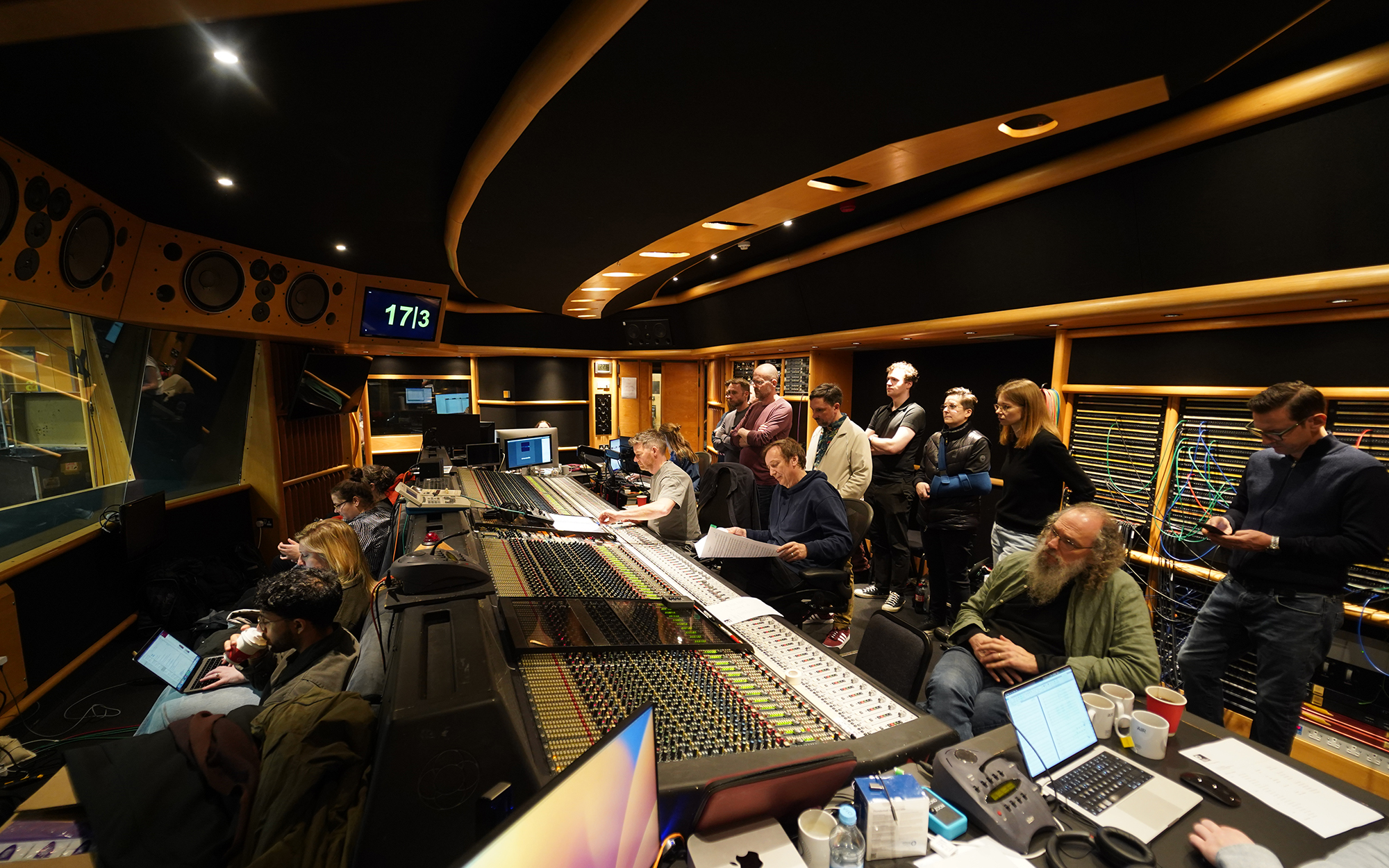
For this project, the London Contemporary Orchestra performed two contrasting works:
- Train Journey, a new composition by Academy Award–winning composer Volker Bertelmann (Hauschka), written expressly to explore immersive musical storytelling.
- Schreker’s Kammersinfonie, whose intricate textures and shifting colours pose a rewarding challenge for spatial capture.
To reveal the different possibilities of immersion, the orchestra was recorded in two physical configurations: a traditional 180° layout and a circular 360° arrangement that places performers around the microphone arrays. This dual approach enables listeners and researchers to compare how layout, composition, and recording technique interact to shape the listening experience.
Eight Microphone Arrays, Eight Perspectives
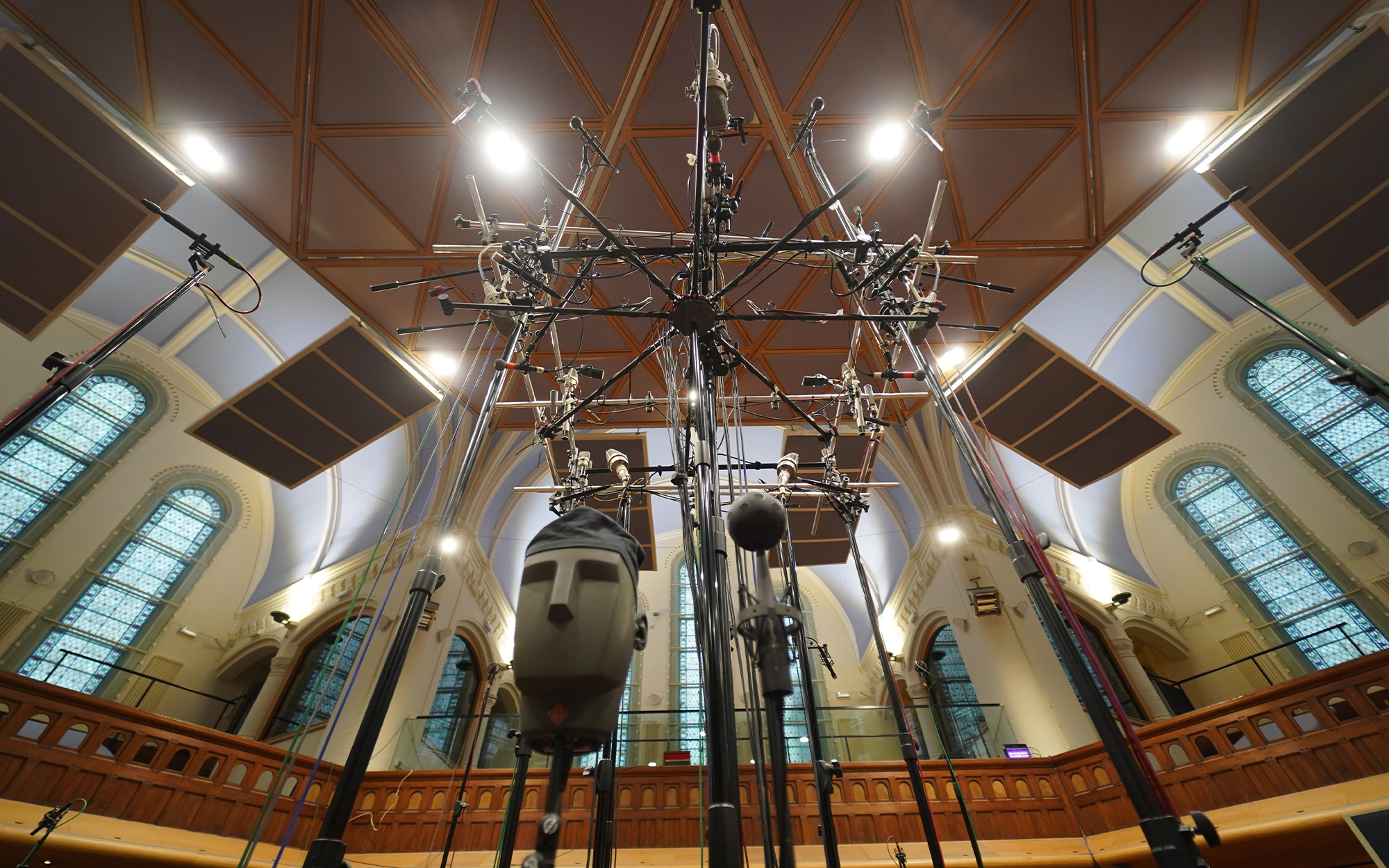
One of ECHO’s defining features is the diversity of microphone arrays contributed by the participating engineers. Rather than adopt a single standard, the project embraces the individuality of each designer’s philosophy, honed over years of recording for film, games, and classical music.
Among the arrays included are:
- 2L Prism (Morten Lindberg), refined for tonal transparency and natural balance.
- AirCage (Nick Wollage), extending the Decca Tree tradition into the immersive domain.
- ESMA-3D (Hyunkook Lee), designed for precise, continuous 360° imaging and VR rotation.
- P3H Anamorphic and P3H Pyramid (Mark Willsher), created to shape spacious, cinematic sound fields.
- PAMA (Simon Ratcliffe), tailored for Dolby Atmos workflows in contemporary scoring.
- PCMA-3D v2 (Hyunkook Lee), built on psychoacoustic principles of vertical localisation.
- PentaSphere (Anthony Caruso & Kellogg Boynton), inspired by spherical HRTF design and the PlayStation spatial audio ecosystem.
Together, these arrays form a rare comparative resource: a set of eight professional interpretations of immersive orchestral capture, all recorded simultaneously under identical conditions.
A Comprehensive Open-Access Database
All materials from the session have been released open access under a CC BY-NC-ND 4.0 license, forming the ECHO database — an extensive library intended for education, research, and creative exploration.
The collection includes:
- The full multitrack recordings from every array, along with spot microphones, ambience arrays, a KU100 dummy head, and an EigenMike EM32.
- Dolby Atmos 7.1.4 ADM master files, prepared in both “array-only” and full “presentation” versions by each engineer.
- Binaural renders using the APL Virtuoso plugin, enabling accurate virtual playback of the spatial mixes on headphones.
- Pro Tools and REAPER session templates, allowing users to explore and remix the materials with ease.
This open-access model continues the spirit of the previous initiative 3D-MARCo, reaffirming the value of sharing high-quality reference material with the wider community.
Advancing the Field of Immersive Music
Beyond its technical contributions, the ECHO Project invites a broader reflection on how orchestral music may evolve in an immersive landscape. It foregrounds the interplay between composition, spatial design, and microphone technique, demonstrating how each element shapes the listener’s sense of presence, scale, and narrative.
For students, engineers, and researchers, ECHO offers a rich foundation for study. For composers and producers, it offers a glimpse into new creative possibilities. And for listeners, it provides an opportunity to encounter the orchestra in a more enveloping, multidimensional form.
The project was made possible through the generous support of AIR Studios, Air Edel, HHB/Avid, Dolby, Dynaudio, Spitfire Audio, Audeze, Audiomovers, and many others, alongside the musicians of the London Contemporary Orchestra and conductor Hugh Tieppo Brunt.
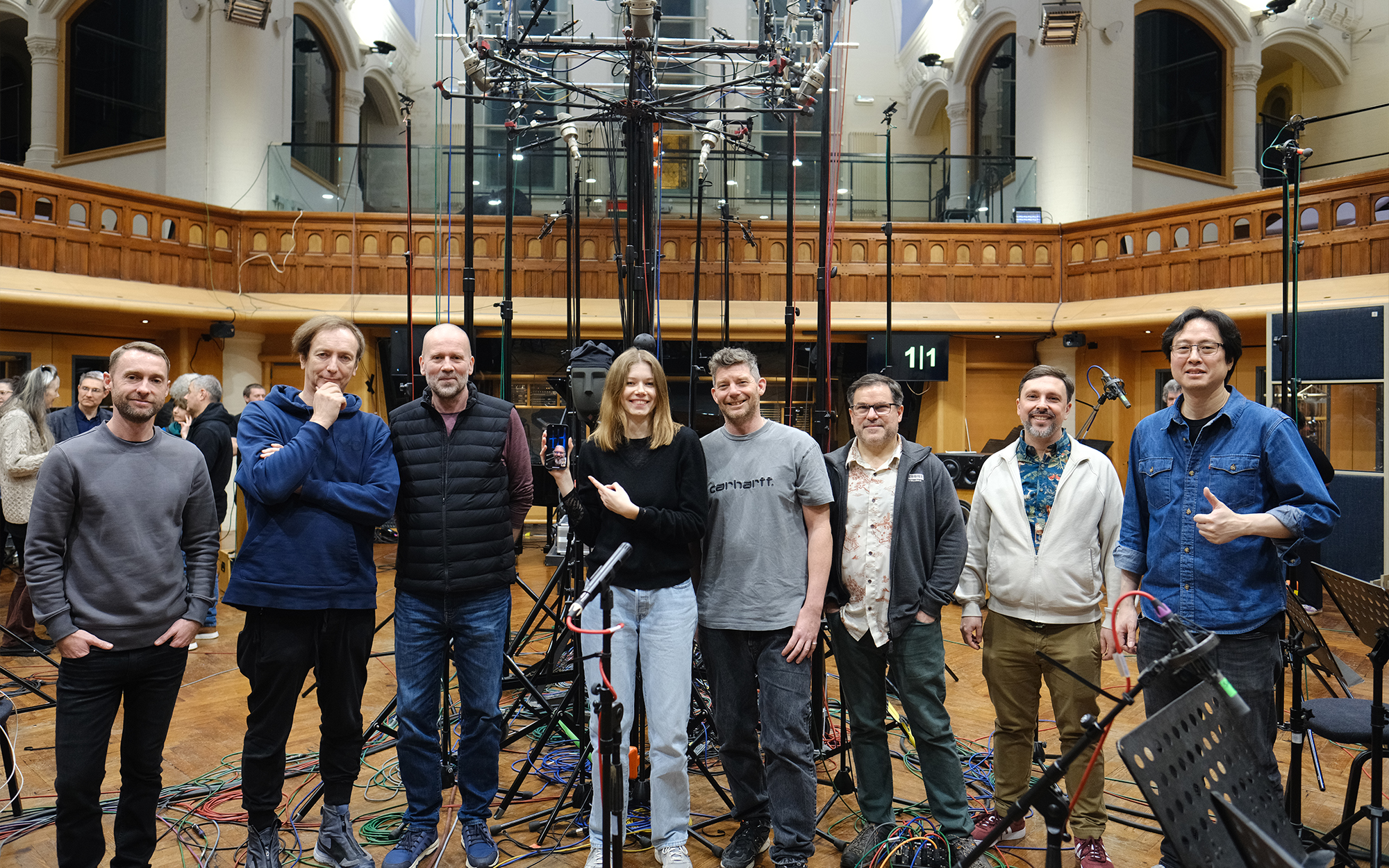
A Year of Immersive Discovery
ECHO was designed to be a catalyst, sparking curiosity in practitioners just beginning their immersive journey while challenging seasoned professionals to rethink their established workflows. Over the past year, the project has matured into a vital ecosystem for educators, researchers, and sound engineers. It offers the community a rare opportunity to learn, compare, and combine techniques using materials of the highest quality.
By providing open access to recordings from a renowned studio space, captured through a variety of microphone arrays, and performed with the highest level of musicianship and composition, ECHO removes the usual barriers to entry. It allows users to experiment with professional-grade assets that are usually locked behind closed doors, bridging the gap between theoretical research and the practical realities of a recording session.
ECHO Use Cases
The ECHO Project resources have been used across a wide range of applications in both the professional audio industry and academia, for example:
- Choosing a microphone array for capturing enveloping ambience in a re-amping session at Abbey Road Studio 2, London, by Emre Ramazanoglu, mixer, producer, and songwriter.
- Teaching immersive orchestral recording techniques at Abbey Road Institute, London, by James Auwarter, recording and mixing engineer.
- Experimenting with diffusion strategies for spatial orchestral recordings, by John Pax, Managing Director, Harvard Shelemay Sound Lab, USA.
- Supporting decisions on experimental immersive microphone arrays for Dolby Atmos production of acoustic music, by Matt Anderson, engineer and owner of MillSounds Studio, USA.
- Exploring immersive recording techniques in an ensemble recording class, by Kazuya Nagae, Professor, Sound Media Composition Course, Nagoya University of the Arts, Japan.
- Teaching immersive mixing and critical listening, by Kieran Lynch, Lecturer in Sound and Music Production at the Institute of Art, Design and Technology (IADT), Ireland.
The Future of ECHO
As we move into the second year of ECHO, the focus shifts from data collection to broader community engagement and real-world application. To mark this milestone, we are planning a special online event that will invite feedback, explore how the resource has inspired engineers to experiment with new techniques, and discuss how ECHO can continue to grow as a hub for the immersive audio community.
We hope ECHO will serve as a valuable resource for anyone interested in immersive sound, from students and educators to composers and music lovers alike. The event will provide a space to share how the database is being used in both smaller- and larger-scale projects, examine the impact of composition, musicians positions and different microphone arrays on the creative process, and encourage dialogue between the technical and artistic sides of the industry. We invite you to download the tracks, join the webinar, and take part in shaping the sounding future of immersive productions.
For the latest updates and detailed information about the event, please sign up for our newsletter or follow us on social media (@echo_immersive_recording).
Visit: https://apl-hud.com/echo/

Nick Wollage, Katia Sochaczewska, Hyunkook Lee
Hyunkook Lee, Katia Sochaczewska, Nick Wollage
Dr Hyunkook Lee is Professor of Audio and Psychoacoustic Engineering and Director of the Applied Psychoacoustics Lab (APL) at the University of Huddersfield, UK. He is also a Tonmeister specialising in immersive spatial recording. Hyunkook is an expert in spatial audio psychoacoustics, the recording and reproduction of immersive audio, perceptually motivated virtual acoustic rendering for binaural audio and XR applications. He has developed a number of 3D microphone arrays such as PCMA-3D, ESMA-3D and Lee-Rec 3D. His research provided a theoretical basis for the development of Schoeps’ award-winning ORTF-3D microphone array. He is a Fellow of the Audio Engineering Society (AES), an Associate Technical Editor for AES Journal and Vice President of the AES Technical Committee on High-Resolution Audio.
Katia Sochaczewska, PhD, is an immersive music producer and researcher specialising in spatial audio technologies. She currently leads the perceptual evaluation and optimisation of Eclipsa Audio’s Open Binaural Renderer at University of York. She completed her PhD from AGH University of Science and Technology in Kraków, Poland, focusing on perception in ambisonics technology. Her immersive compositional and production skills are backed up by deep understanding of auditory perception. Beyond production and research, Katia is dedicated to sharing her knowledge and creating accessible resources to help composers, music producers and engineers explore immersive production techniques, understand challenges and make the most of all: channel-, scene- and object-based formats. Portfolio: www.katia-sochaczewska.com
Nick Wollage began working as a recording and mixing engineer in the early 1990s after graduating from the University of Surrey’s Tonmeister degree course. He joined AIR Studios in 1996 and it was soon after this that he began his long association with film and game music. Since then he has recorded and mixed more than 500 film scores, including Chicken Run, Shrek, Harry Potter and the Goblet of Fire, Pride and Prejudice, Atonement, the How To Train Your Dragon trilogy and Phantom Thread. Recent projects include: Wicked (Parts 1 and 2), Saltburn, The Wild Robot, Paddington 3, Nosferatu and Wuthering Heights. Games titles include the Batman Arkham series, Genshin Impact, Spider-Man 2, God of War: Ragnarok and Suicide Squad: Kill the Justice League.
Article topics
Article translations are machine translated and proofread.
Artikel von Katia Sochaczewska
// Similar articles